
Industrial Products
The by products that are being generated in various process plants such as Phosphoric Acid Plant, Sulphuric Acid Plant are value added and marketed as Industrial inputs which are utilised in Cement and Aluminium Industries, Detergents & other chemical processing industries.
-
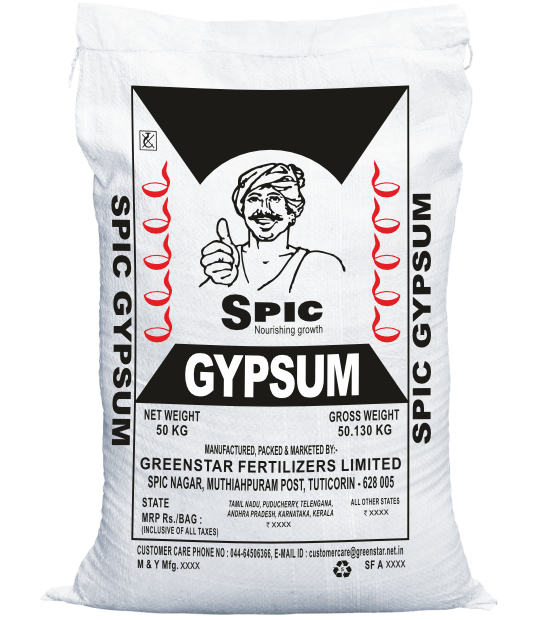
SPIC Gypsum : Phospho Gypsum – Industrial Grade
-
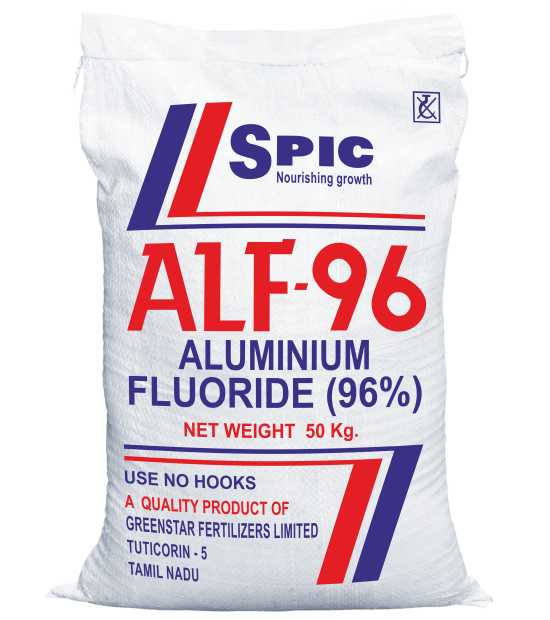
SPIC ALF-96 (Aluminium Fluoride)
-
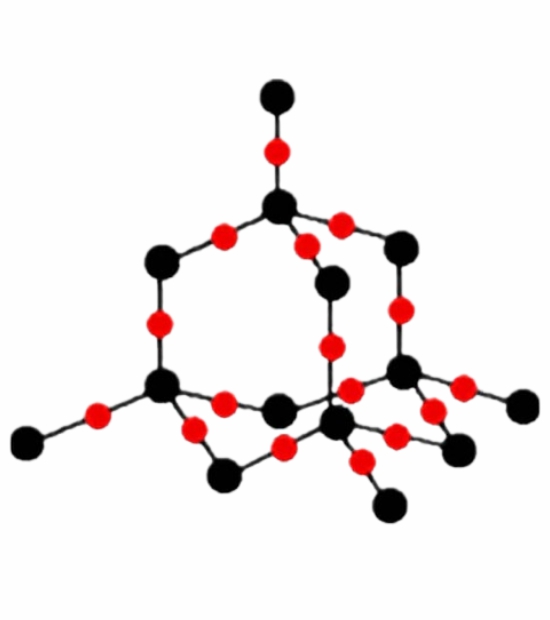
SPIC Silica
-
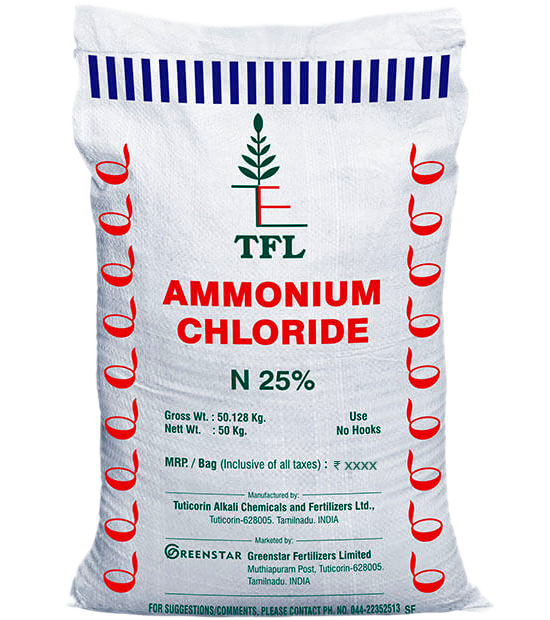
Industrial Grade Ammonium Chloride
-
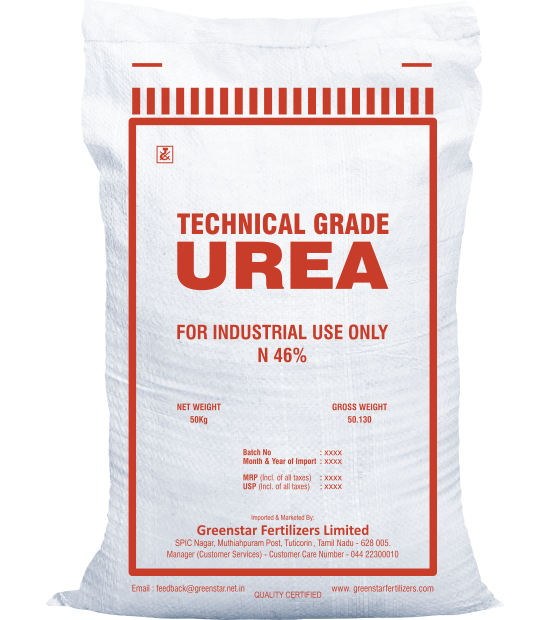
Technical Grade Urea (Imported)
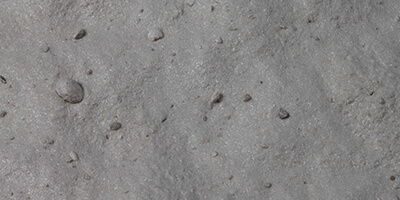
SPIC Gypsum : Phospho Gypsum – Industrial Grade
SPIC Gypsum is a by-product from Greenstar’s phosphoric acid manufacturing plant.
 APPLICATION
Agricultural use
- Gypsum works as an agent to remove saline or alkaline ingredients in the soil and acts more or less like manure.
For industrial use
- Gypsum is used to manufacture Gypsum boards. In the cement industry, gypsum is used to manufacturing lime. Gypsum is also used in manufacturing Plaster of Paris.
SPECIFICATION
- White crystalline powder
- SPIC Gypsum is an ideal soil conditioner and a rich source of calcium (23%) and sulphur (18%). CaSO4, 2H20 90%, T – P2O5 0.50 %

SPIC ALF-96 (Aluminium Fluoride)
Aluminium fluoride (AlF3) is an inorganic compound used primarily in the production of aluminium. This colorless solid can be prepared synthetically but also occurs in nature.
Description
It is used in the production of aluminium metal. Aluminium fluoride is an important additive for the production of aluminium by electrolysis. Together with cryolite, it lowers the melting point to below 1000 °C and increases the conductivity of the solution. It is into this molten salt that aluminium oxide is dissolved and then electrolyzed to give bulk Al metal.
When used with zirconium fluoride, aluminium fluoride is an ingredient for the production of fluoroaluminate glasses. It is also used to inhibit fermentation. It is a sputtering target for preparation of low index films.
Greenstar’s AlF3 process involves reaction of Aluminium Hydroxide with Hydro Fluosilicic acid. This is later filtered to remove Silica. The high purity aluminium fluoride is then crystallized and dried.
Greenstar’s aluminium fluoride is a dependable input for major aluminium producers of India and the world like Hindalco, Dubal, Stella and Foundry Service.
SPECIFICATION
| Property | Unit | Standard purity | High purity |
|---|---|---|---|
| Purity as Alf3 | % ww | 96.0 Min | 96.0 Min |
| Loss on Ignition | % ww | 1.0 Max | 1.0 Max |
| Silica as SiO2 | % ww | 0.12 Max | 0.04 Max |
| Phosphates as P2O5 | % ww | 0.015 Max | 0.015 Max |
| Iron as Fe2O3 | % ww | 0.015 Max | 0.015 Max |
| Bulk Density | GM/CC | 0.70 Min | 0.70 Min |
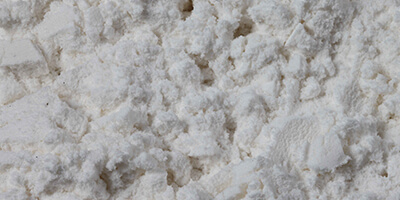
SPIC Silica
Silica, also known as Silicon dioxide (from the Latin silex), is a chemical compound that is a dioxide of silicon with the chemical formula SiO2. It has been known since ancient times.
Description
Silica is most commonly found in nature as quartz, as well as in various living organisms. Silica is one of the most complex and most abundant families of materials, existing both as several minerals and being produced synthetically.
In the chemical industry, Silica is also used as a filter aid in phosphoric acid plants to improve recovery efficiency. The Greenstar process involves reaction of Aluminium Hydroxide with Hydro Fluosilicic acid followed by filtration to recover silica.
Major customers include the Vedanta Resources group and the Coromandel companies.
SPECIFICATION
| Property | Unit | Standard purity |
|---|---|---|
| Product colour | White | |
| Bulk Density | g/cc | 0.50 Max |
| Free Moisture | % WW | 40-50% |
| Analysis on Dry basis | ||
| Bulk Density | % WW | 80% Min |
| Bulk Density | % WW | 5 % Max |

Industrial Grade Ammonium Chloride
APPLICATION
1. Metalworking and Metallurgy
This is the most dominant industrial use. It is used as a flux in preparing metals for tin coating, galvanizing, or soldering.
- Cleaning Agent: It cleans the surface of the workpiece by reacting with the metal oxides on the surface to form a volatile metal chloride, ensuring a strong bond with the solder or coating
- Galvanizing: In the hot-dip galvanizing process, it prevents the formation of new oxides before the steel is dipped into molten zinc
2. Battery Manufacturing
- Dry – Cell Batteries: Ammonium chloride is a key component in the production of dry-cell batteries (specifically Zinc-Carbon and Magnesium-Carbon batteries).
- Electrolyte: It serves as the electrolyte paste that facilitates the flow of ions between the anode and the cathode
3. Leather and Textile Industries
- Leather Tanning: It is used in the "bating" process to neutralize the lime used in dehairing hides, which helps soften the leather
- Textile Dyeing: It acts as a catalyst in textile printing and as a levelling agent to ensure dyes are applied evenly to cotton and other natural fibres
4. Other Industrial Applications
- Chemical Feedstock: Used as a raw material to produce other ammonium compounds or as a buffer in chemical synthesis
- Oil & Gas: Used in "clay stabilizers" to prevent clay swelling during oil well drilling
- Electronics: Utilized in the etching process for printed circuit boards (PCBs)
- Food Industry: Often labelled as E510, it is used as a yeast nutrient in bread making and to provide the distinct "salty" kick in Nordic salt liquorice
- Wood Industry: It is used as a special paste for wood burning / art. Effectively functions as a flame retardant and as an adhesion aid for preparing wood surfaces
Description
Industrial Ammonium Chloride (NH4Cl) is a versatile, inorganic white crystalline salt primarily used as a high-efficiency chemical intermediate in several heavy industries. It is commonly referred to as Sal Ammoniac due to its mineral form. It is highly soluble in water and functions primarily as a source of nitrogen or as a flux in metalworking.
SPECIFICATION
|
S.No |
Composition |
Unit |
Value |
|
1. |
Ammonium Chloride |
% by weight |
98.1 |
|
2. |
Chloride other than Ammonium Chloride (as NaCl) |
% by weight |
0.86 |
|
3. |
Moisture |
% by weight |
0.10 |
|
4. |
p H (5% solution) |
|
6.6 |
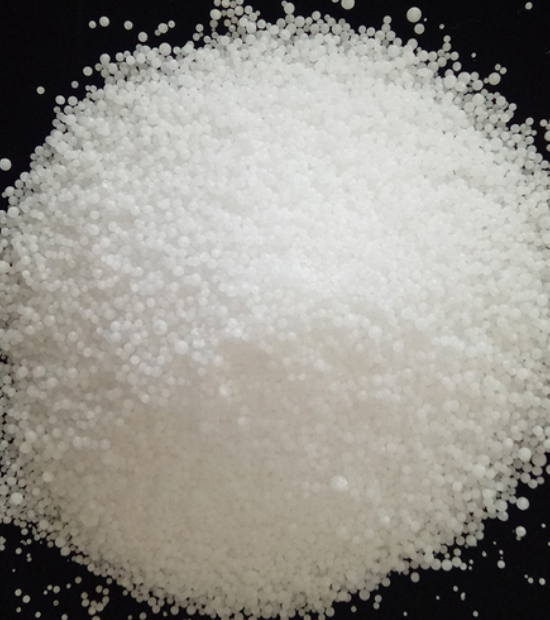
Technical Grade Urea (Imported)
APPLICATION
- Manufacturing of laminates and plywood
- Production of dyes, pigments, and CPC Blue
- Raw material for urea-formaldehyde resins (UFR)
- Other applications: Used in cattle feed as a nutritional supplement
Description
Technical Grade Urea is a high-purity form of urea designed for industrial and technical applications. It appears as a white, crystalline solid with excellent solubility in water with nitrogen content of 46%. With low moisture and biuret levels, it ensures reliable performance in various manufacturing and processing industries.
SPECIFICATION
|
S. No |
Properties |
Normal (%) |
|
|
1 |
Total Nitrogen as N (% by weight) |
Minimum |
46 % by weight |
|
2 |
Biuret content (% by weight) |
Maximum |
0.9 % weight |
|
3 |
Moisture (% by weight) |
Maximum |
0.6 % by weight |
Agricultural Services

About Us
SPIC is one of the earliest units set up in the country with a vision to produce high-quality fertilizers to improve the agricultural output of the country.